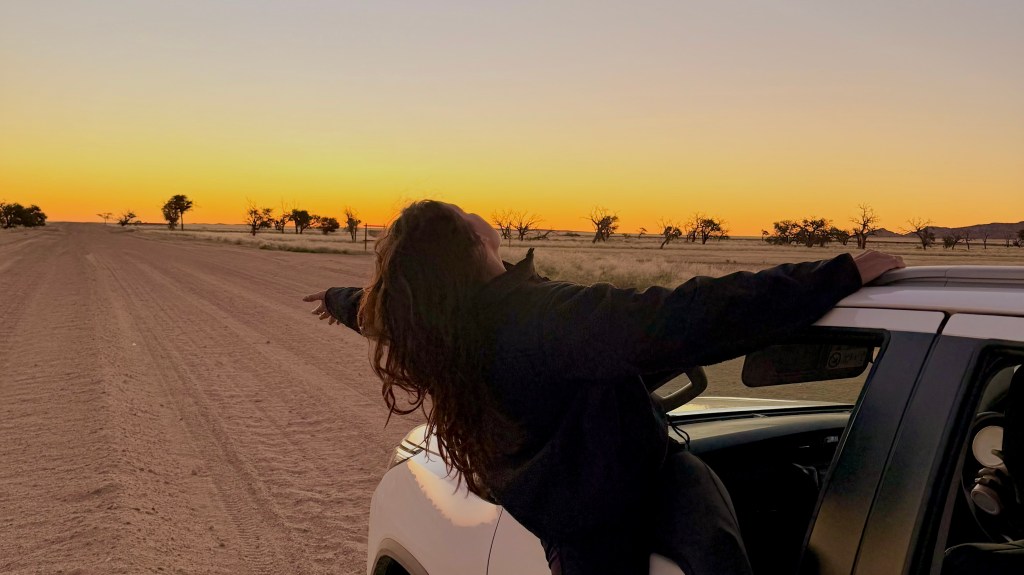
I came back to Namibia and on day two of my visit, I found a bright orange and black striped centipede on the pavement.
My eyes filled with tears.
Not out of fear. Not out of worry. Not because this very venomous insect was right below my open-toed sandals.
But out of sentiment.
I cried because of the memories that came flooding back.
It was the same tiger centipede I found in my house in November 2022 when I first moved into my new home in Namibia as a Peace Corps volunteer.
The same centipede that Lukas ran over to kill for me in the middle of the night. A moment that foreshadowed the way Lukas would care for me over the next few years.
And it was the same centipede that, over time, I learned not to fear.
During my life in Namibia, I grew into a version of myself I had never known before. One who was less afraid of snakes and bugs. One who was a little more carefree. A little less high strung. A little more in love with the gift of life.
So I looked down at that centipede, one and a half years after saying goodbye to Namibia, and I cried at the full circle of it all.
I was back.
Back in the place where growth, love, and an old version of myself still existed.
Or maybe not an old version. Maybe a truer one.
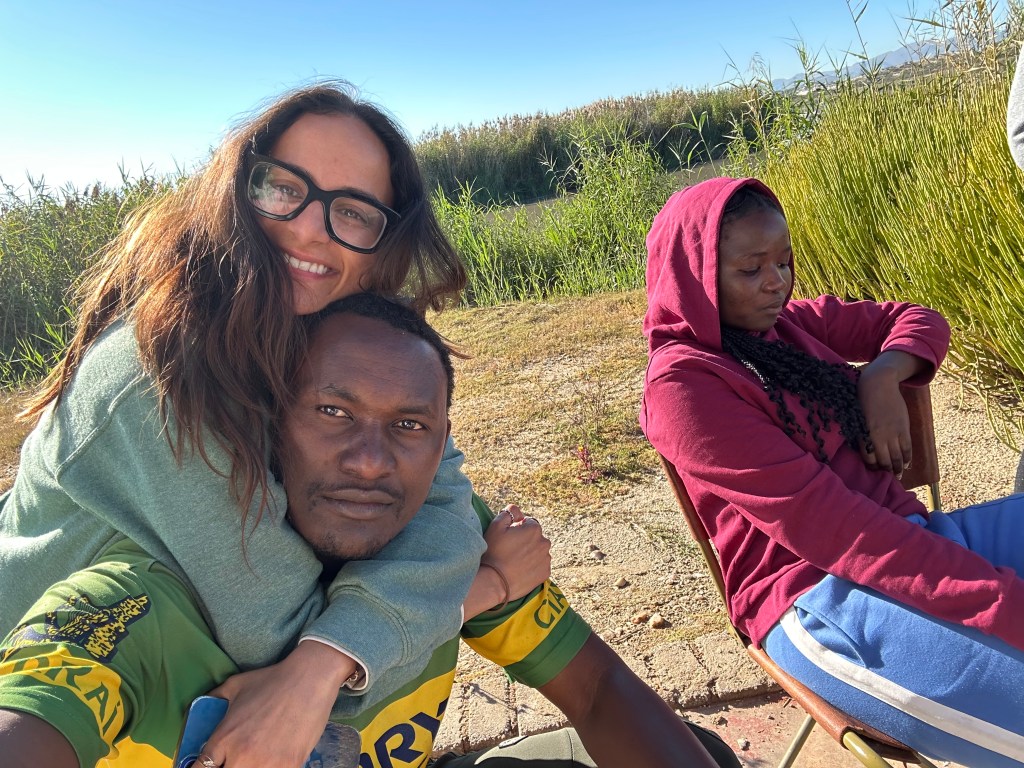
I’ve been back in the U.S. for about a year and a half since I left Namibia. Since then, I started my MBA at Wharton. And as you can imagine, or as you’ve probably heard me mention a time or two, it was a hard transition.
The jump from Peace Corps volunteer in Namibia, working with women in economic empowerment, to MBA student at Wharton, studying finance in capitalistic America, was not an easy one.
Throughout the school year, I struggled with finding purpose.
My purpose.
I would walk through the halls of school, sit in class, listen to conversations about capital, markets, valuations, strategy. And I would wonder where I fit in all of it. I would wonder what I was chasing. If this path was taking me closer to myself or farther away.
Coming back to Namibia reminded me why I am doing what I am doing.
Finance as a tool for good. That is what I am chasing.
For better or worse, I have found that the MBA gives you a sense of internal confidence and external credibility. In three weeks, you cannot do everything. But I tried to work with my old social enterprise on some financial strategy that will hopefully result in more money in the hands of the women who run the organization. Women who once cared for me when I called Penduka home.
And in a country with unemployment that touches so many families, when working women earn more money, communities prosper.
That part felt clear to me again.
At Wharton, I’ve also had the joy of making new friends and thinking deeply with them about life. Not just school. Not just careers. But life. It has amazed me, the depth and groundedness of some of the people I’ve gotten to know.
In a conversation that stuck with me over brunch at a friend’s house, I learned a new term.
Lindy.
Lindy is an adjective that essentially describes activities that have existed since early Homo sapiens. Activities that have survived because they are, in some way, deeply human: gathering, sitting outside, eating fruit, gardening, storytelling, being with your people. Camping is lindy. Writing with pen and paper is lindy. Not using your phone is lindy.
We laughed about it.
But I haven’t stopped thinking about it since.
During my trip to Namibia, friends and family from back home kept asking me, “So what are you doing in Namibia today? What are your plans for the week?”
Most days, I gave the same answer.
“I’m just with my people.”
And that was true. There was not always an excursion. Not always an activity. Not always an itinerary.
Just presence.
We talk. We laugh. We make jokes in the moment. We hold the babies. We watch the sky. We sit in silence.
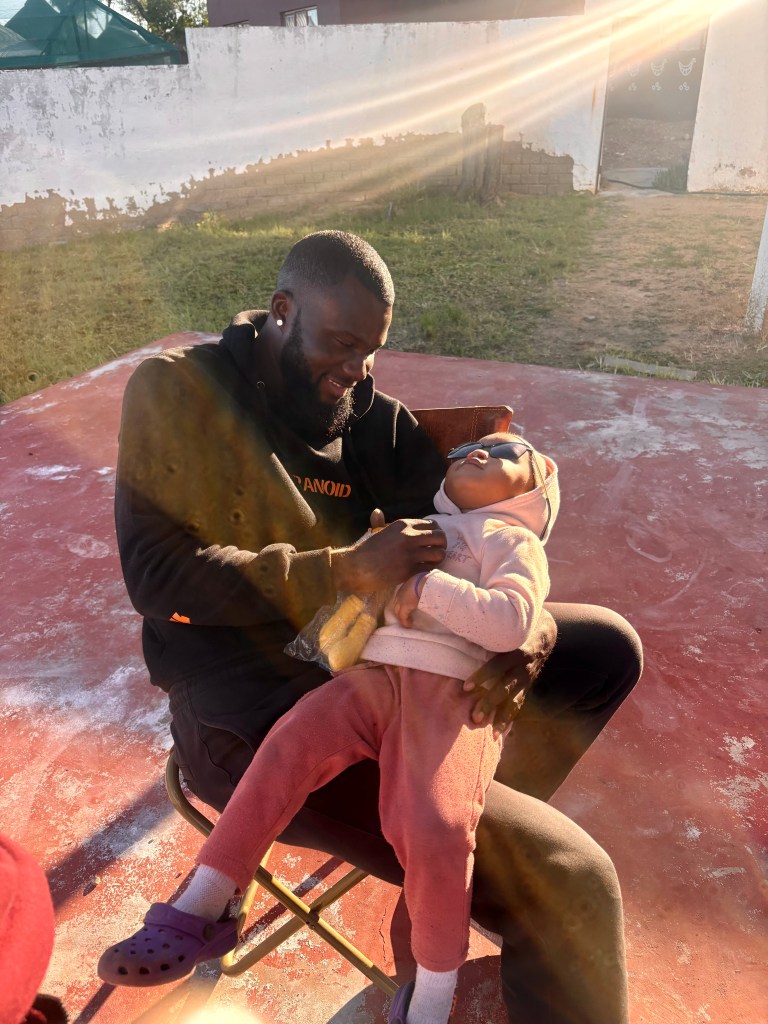
And it is not because I am there. It is just the Namibian way of life. The community way of life.
You pull up a chair in a shared space and you exist. And in some unexplainable way, it brings me happiness.
It brings me peace.
At some point I thought, is this lindy? Is this what humans were always intended to do? Is that why I am so happy here?
In Namibia, I wake up to the sun pouring into my room and birds chirping outside my window. I wake up on a compound where everyone lives together. Different families. Different ages. Different rhythms. But everyone coexists.
Not like the way we coexist with neighbors in the States, where we live next to each other but barely speak.
This is different.
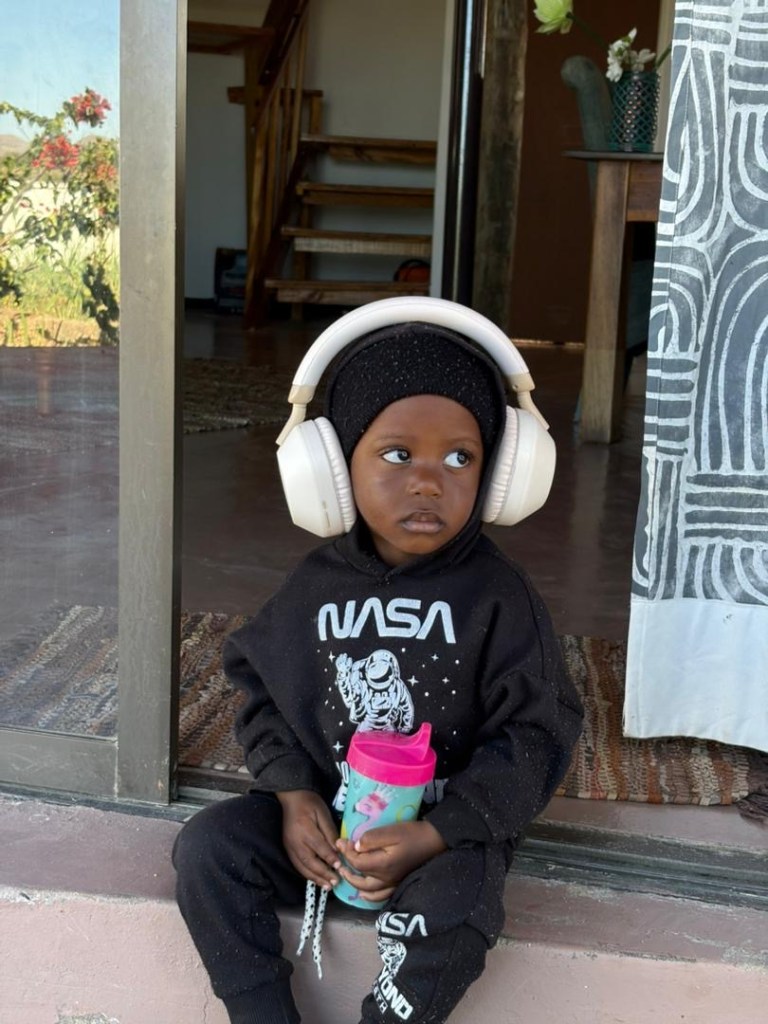
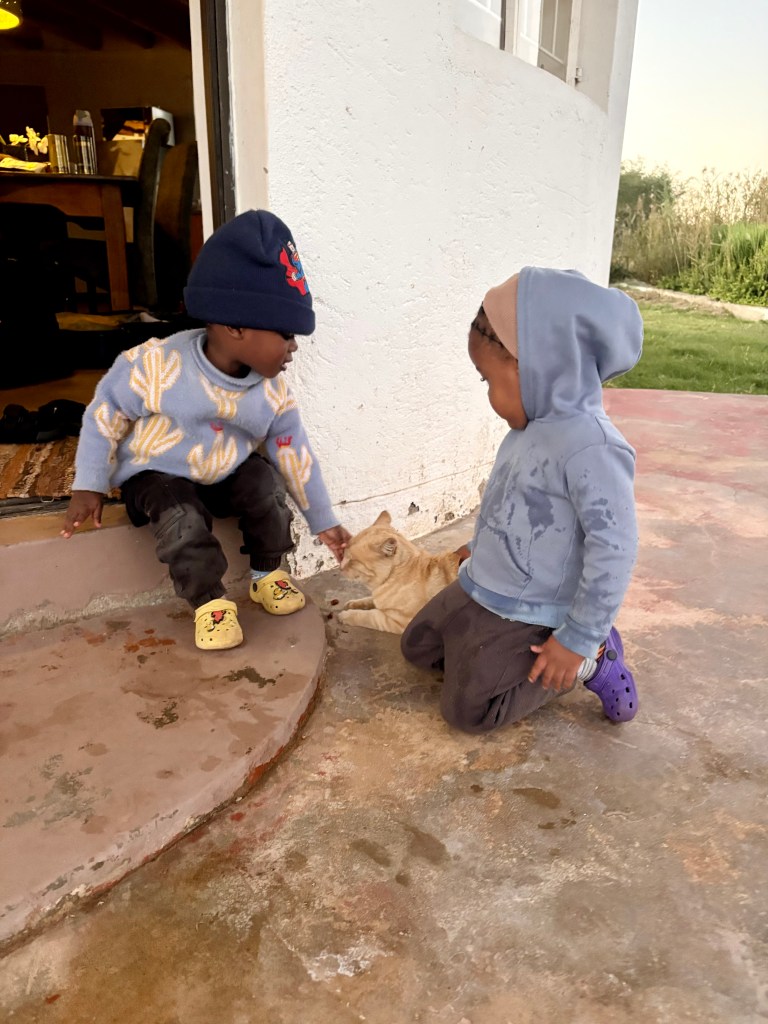
The kids run around freely and are cared for by everyone. On Sunday mornings, people gather outside. The men wash the cars. The women wash the clothes. The young ones gather closely in the one area where the Wi-Fi reception is strongest. They listen to music, watch Instagram reels, post their WhatsApp statuses, all sitting near one another.
Sure, the Wi-Fi and the cars are not lindy. But the community living most definitely is.
Collectivism is lindy. Caring for your community is lindy. Looking after your neighbors is lindy.
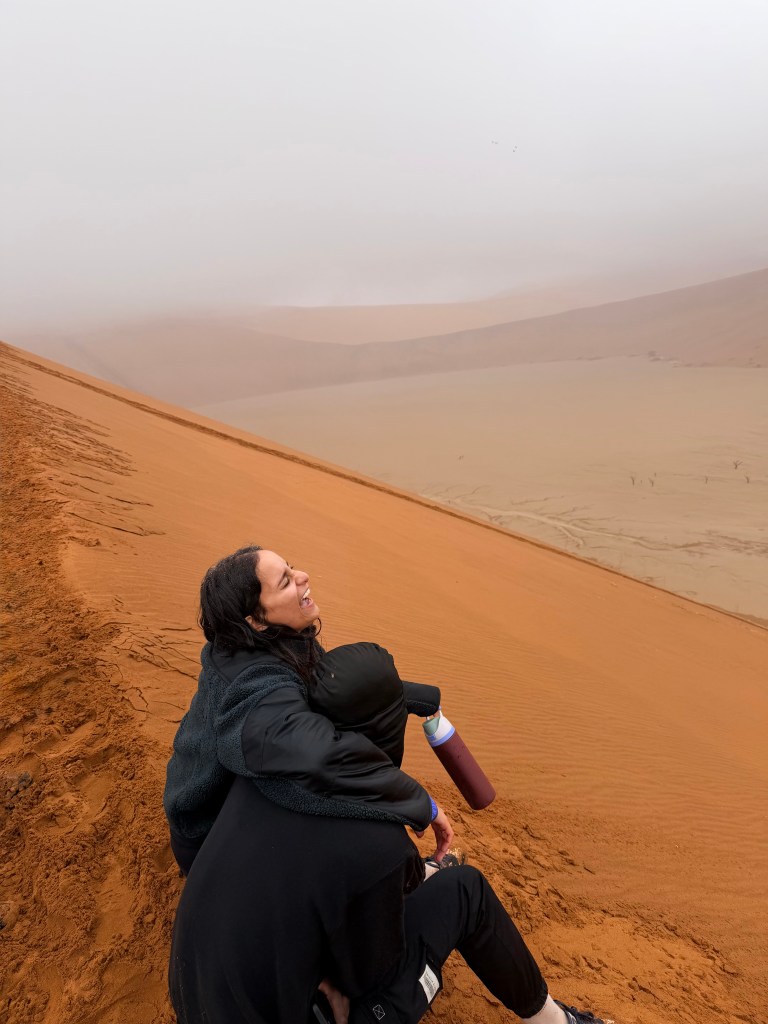
Four days a week at Wharton, I walk the streets of Philly to get to class. Most days, if not every day, I see people passed out on the sidewalk. The homelessness and drug epidemic that consumes so many American cities, but especially Philly, is heartbreaking.
I’ve heard some of my African friends at school joke that they would rather be poor in their respective countries in Africa than poor in the U.S.
And honestly, I understand what they mean.
You can thank Africa’s collectivist culture and America’s individualistic culture for that reality.
As a child of immigrant parents, it is not lost on me what the American dream has made possible. From capitalism. From the endless opportunities the U.S. has to offer. I do not take that lightly.
But I can also recognize the drawbacks of this culture.
A culture where we have forgotten how to look after one another. Where success and happiness can feel misaligned.
Where we work so hard to become something that we lose the little moments. The slow moments. The simpler ones.
We trade our time for money. Money that we often spend on ourselves or only our immediate families, forgetting how much joy and love can come from taking care of one another. Money that replaces the need for other kinds of acts of service. Other kinds of love.
The kind we crave as human beings.
I thought about this at school a time or two.
When I got sick in Namibia, my host mom came over, boiled a pot of water, threw a blanket over my head, and sat with me while the steam cleared my sinuses.
When I got sick in Philly, Ady DoorDashed me medicine while working from his office in California.
Both were love.
But they felt different.
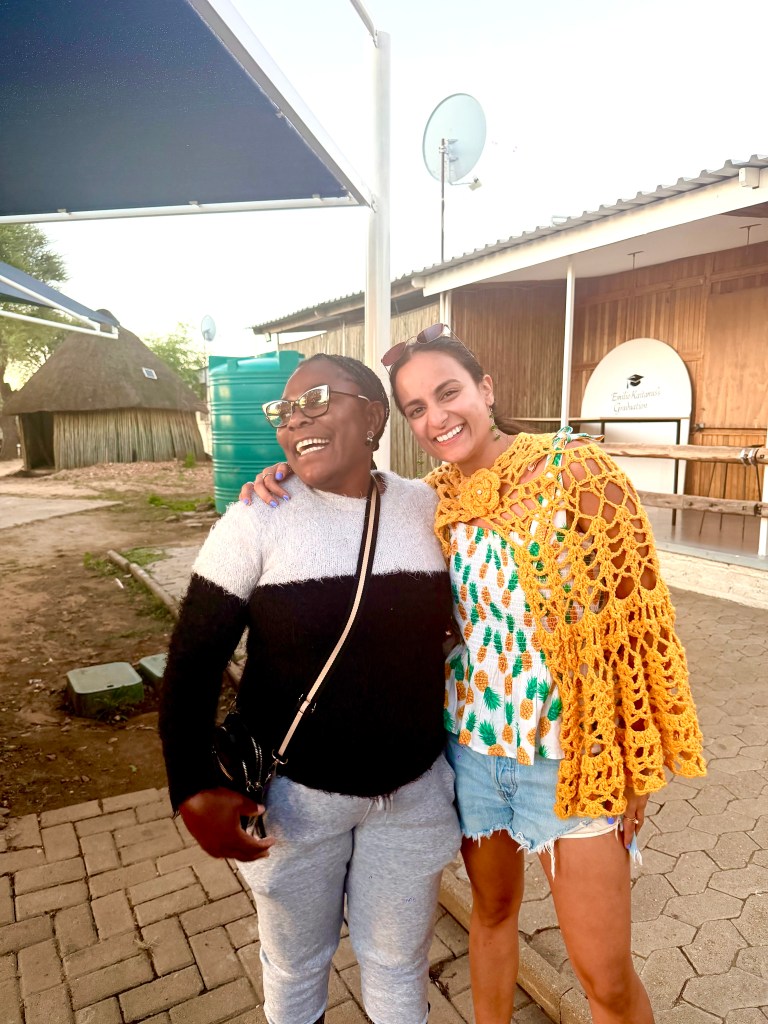
When I was scared there was a snake in my house in Namibia, my host brothers came in and checked every corner of my house every single night until I left.
When there was a roach in my Philly apartment, I called an exterminator to come take care of it.
Life in the U.S. is convenient, sure.
But I wonder sometimes what our convenience has cost us.
I wonder how many opportunities we have lost to give and receive love in the little moments. I wonder how many times efficiency has replaced intimacy. How many times ease has replaced care. How many times independence has been praised so highly that we forgot we were never meant to do life alone.
Our endless options and opportunities do not always lead to more happiness. I learned in my behavioral economics class recently that more options do not always make us happier, contrary to traditional economic theory.
And I felt that.
Because in the U.S., we have so many options. So many paths. So many ways to optimize, upgrade, improve, achieve.
We have the big things. The big titles. The big schools. The big dreams. The big moments.
But I think we often miss the little things.
This trip forced me to reconcile both worlds. To take the lessons I have learned in Namibia, in Philly, in school, in love, in friendship, in community, and try to understand how they all fit together.
As I write this, I’m wondering where I am going with it.
What do these reflections mean?
Maybe it is this.
I do not think I came back to Namibia just to remember who I was. I think I came back to remember what I know.
That ambition is beautiful, but it is not enough.
That opportunity is a gift, but it is not the same as peace.
That success means very little if it pulls us away from the people and places that make us feel most human.
And that maybe the life I want is not about choosing between Namibia and the U.S., between purpose and achievement, between community and ambition.
Maybe the life I want is about learning how to carry both.
To take from the U.S. its possibility. Its movement. Its belief that you can become.
And to take from Namibia its presence. Its slowness. Its reminder that you already are.
That you can build and still belong.
That you can chase big things and still sit outside with your people.
That you can love a life of opportunity without forgetting the kind of love that shows up with boiled water, a blanket, a chair pulled into the shade, a brother making sure you’re safe from life’s venemous creatures.
Maybe that is the aha.
Maybe happiness is not as complicated as we sometimes make it.
Maybe it is not something waiting at the end of the next achievement.
Maybe it has always been there, in the simple and ancient things.
In community.
In care.
In being known.
In being needed.
In being loved.
If you’ve made it this far in my blog, thank you for reading. Thank you for caring.
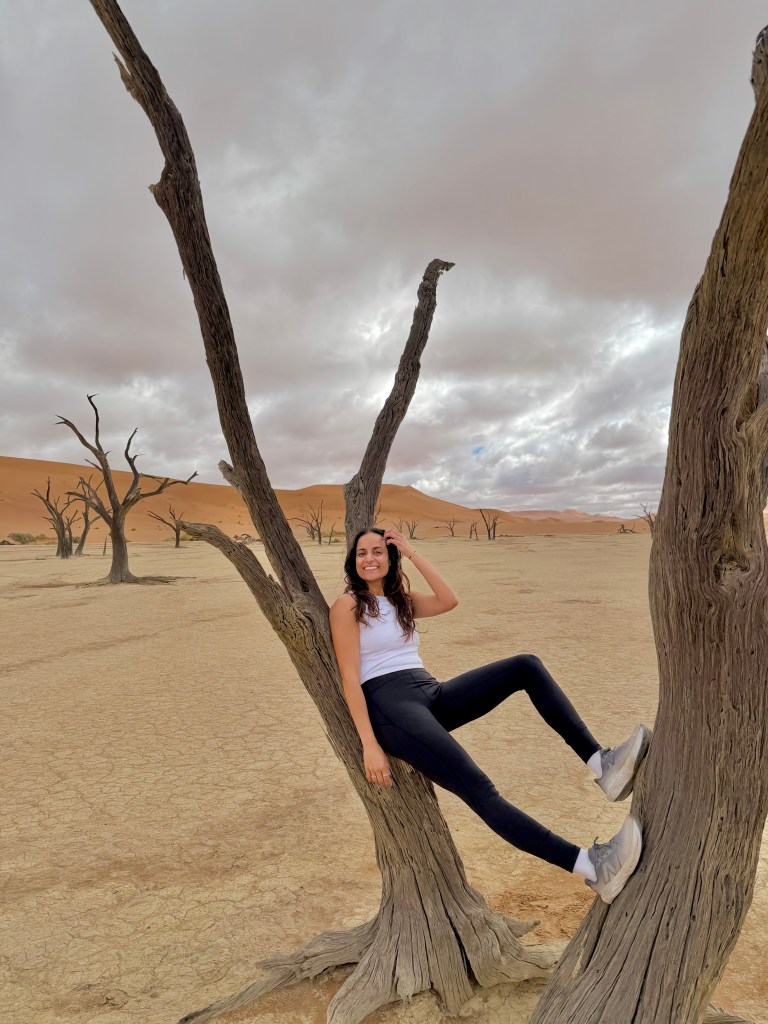
Namibia is special. And if you have not already experienced its magic, I hope one day you get to.
And to my dearest Ady, I remain forever grateful to my life partner, who shares my heart and never holds me back from a love that exists thousands of kilometers physically apart from him.
I appreciate you. And although you are not in Namibia with me, I have never known a Namibia without your love and support from afar.
Thanks for working a job that will forever fund my plane tickets back and forth to my favorite place.
Hehe jk.
With love,
Kaj
 Kajol's Peace Corps Blog
Leave a comment